What are the different types of spelling tests?
Spelling tests have been a staple of classrooms for over a century. Whether you are a teacher building a weekly quiz or a parent helping your kid prep the night before, you have probably wondered whether there are better ways to test spelling than just reading words out loud and hoping for the best.
There are. Quite a few, actually. Knowing which type fits your situation can make a real difference in how well students actually learn and hold onto words. This guide covers every major type, where each one came from, and how digital tools are starting to change things.
A brief history of spelling tests
Formal spelling tests as we know them started taking shape in the 1800s, as public education expanded across the United States and Europe. Early spelling lessons leaned hard on memorization. Students were given word lists, expected to commit them to memory, and then put to the test on paper. That gave us the written spelling test, which is still the format most of us grew up with.
By the early 1900s, educators started pushing back on pure memorization. Research into phonics and how children actually learn to read and write changed the conversation. Teachers began working oral and aural tests into their classrooms, after realizing that hearing and saying words out loud played a bigger role in spelling development than anyone had given it credit for.
The mid-20th century brought standardized testing into schools in a big way. That wave introduced multiple choice and proofreading formats, which made it easier to assess large groups of students quickly. These formats weren’t meant to replace the written test. They were meant to round it out.
Today, digital tools have opened up another chapter entirely. But before we get there, let’s look at each type on its own.
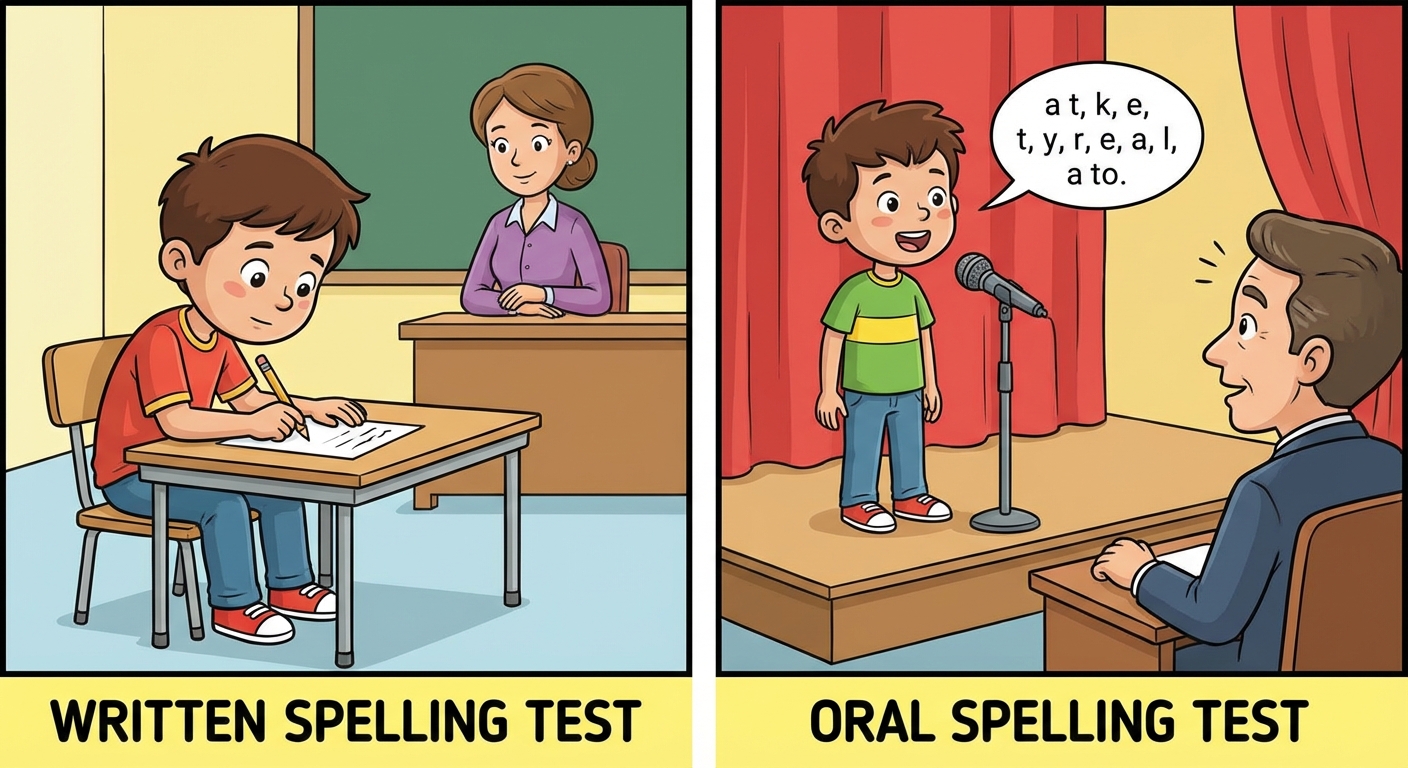
Written spelling tests
This is the classic. A teacher or parent reads a word aloud, and the student writes it down. No tricks, no frills. Written tests are simple to set up and give a clear picture of whether a student can produce the correct spelling from memory.
They have been the backbone of spelling assessment since the 19th century. And for good reason: they work.
This format works best for weekly classroom assessments and straightforward home study.
Oral spelling tests
In an oral spelling test, the student spells the word out loud, letter by letter, rather than writing it down. You have probably seen this format at a spelling bee. It strips away the handwriting variable entirely, which matters more than you might think for younger kids or students who struggle with fine motor skills.
Oral tests have been around since at least the early 1900s. Back when classrooms were smaller and more hands-on, a teacher would simply call on a student and have them spell a word aloud. The format stuck because it is fast and requires no materials at all.
This one works well for one-on-one tutoring, spelling competitions, and students who find writing difficult.
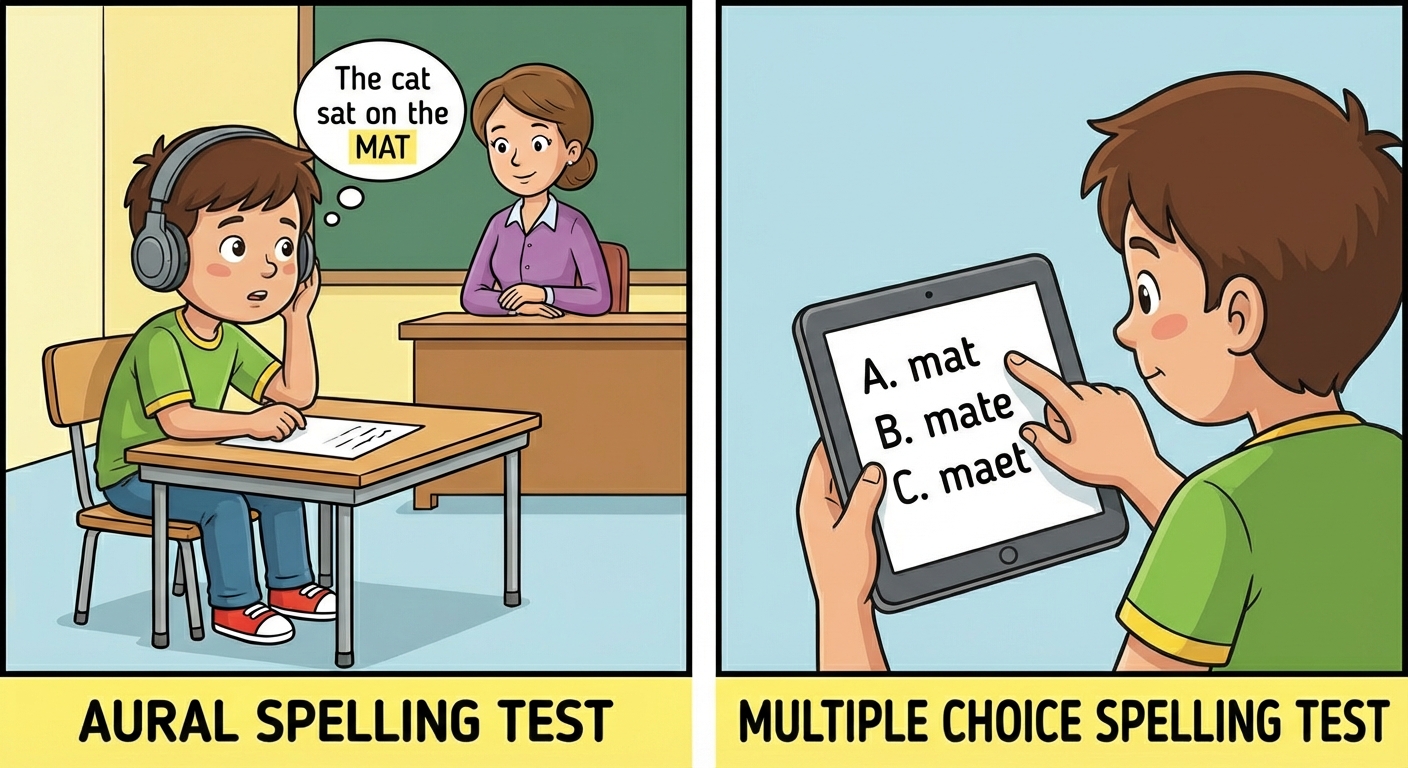
Aural spelling tests
Aural tests zero in on listening. The student hears a word, usually in a sentence for context, and then has to demonstrate their understanding of how it is spelled. This might look like a fill-in-the-blank exercise or selecting the correct spelling from a set of options based on what they heard.
This format ties directly into phonemic awareness, which is a core piece of the Science of Reading. If a student can hear “receive” in a sentence and connect the sound to the right letters, that is a sign they are building real spelling skills, not just memorizing a list.
Aural tests work especially well for younger learners and ESL students.
Multiple choice spelling tests
Here, the student is given a word, sometimes intentionally misspelled, and has to pick the correct spelling from a list of options. Multiple choice tests are fast to grade and work well for testing recognition. The trade-off is that recognition is easier than production. A student might be able to spot the right spelling without actually being able to write it themselves.
Multiple choice formats became widespread in the mid-20th century as standardized testing rolled out across school districts. They are still useful today, especially for quick checks and review sessions before a bigger assessment.
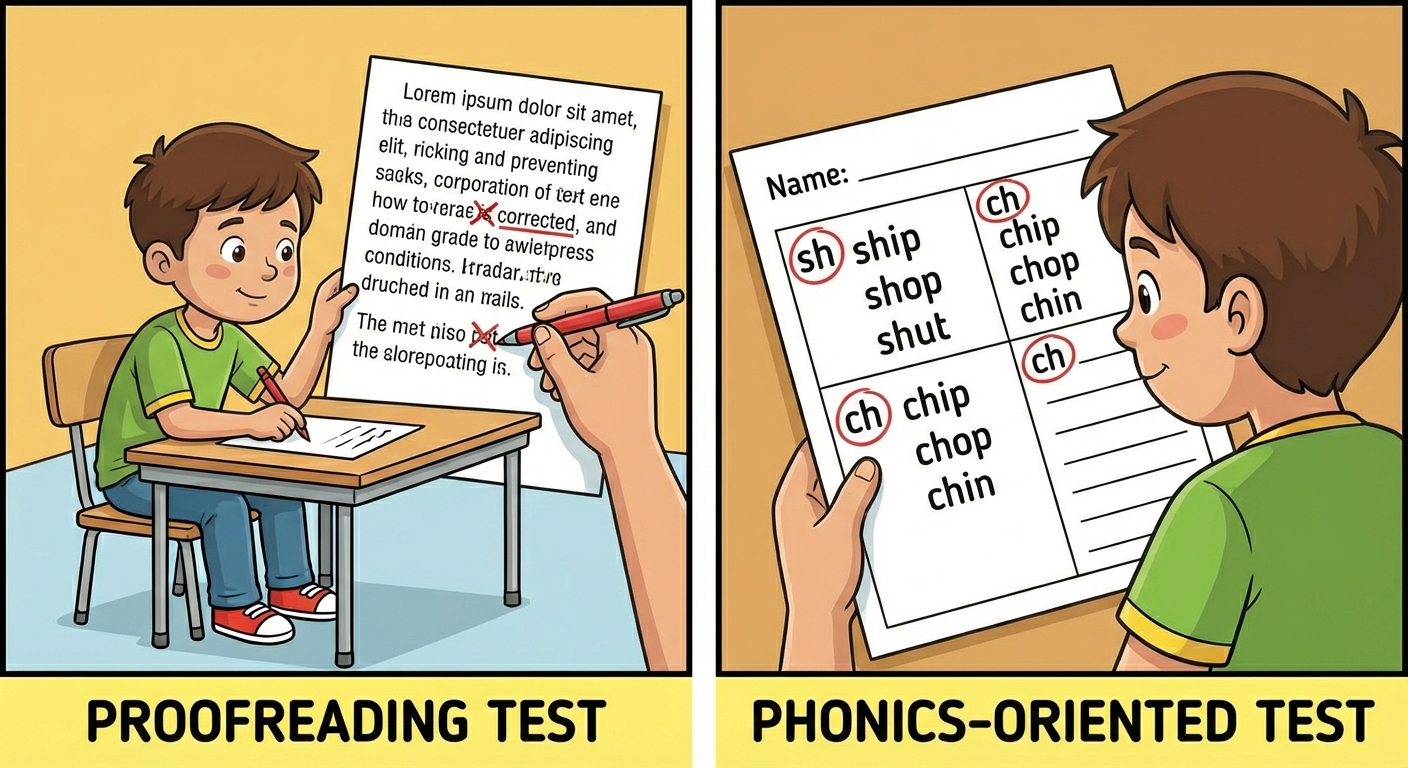
Proofreading tests
Proofreading tests hand the student a passage of text with spelling errors baked in. The student reads through it and has to find and fix those mistakes. This format feels different from a traditional spelling test because it mirrors what students actually do when they write: catch and correct errors in context.
Proofreading tests started showing up in classrooms once educators noticed that spelling in isolation does not always translate to spelling in real writing. This is a good format for older students and writing-heavy curricula.
Memorization-based tests
Memorization tests are about pure recall. Students get a word list, memorize it, and then reproduce those words on a test with no context clues or hints. It is the oldest form of spelling assessment, and also one of the most criticized, because memorizing a word does not necessarily mean a student understands why it is spelled that way.
That said, memorization still has a place. It works well for short-term review before a test, and for building familiarity with a word list before moving into deeper pattern work.
Phonics-oriented tests
Phonics-oriented tests ask students to go beyond memorization and actually apply spelling rules and patterns. Instead of just recalling whether “receive” has an i before an e, a student might be asked to spell an unfamiliar word that follows the same rule. If they can do that, it means they have internalized the pattern, not just the word.
This is the type of test most closely tied to the Science of Reading, which emphasizes decoding and phonemic awareness over rote memorization. A 2007 report from the National Center for Education Research found that re-exposing students to content through quizzes has strong evidence of improving long-term recall. Phonics-oriented tests are the best format for doing that with spelling.
This format works best for structured literacy programs and intervention groups.
How digital tools are changing things
The traditional spelling test is not going anywhere. But digital tools have introduced some capabilities that simply did not exist a few decades ago.
Differentiation is a big one. A digital platform can automatically adjust the difficulty level for each student. One kid gets words matched to their reading level while another in the same class gets pushed with more advanced vocabulary. No extra work on the teacher’s part.
Then there is spaced repetition. Instead of cramming all practice into one night, spaced repetition re-exposes students to words at increasing intervals over time. The scheduling happens automatically. Students just show up and practice. It is one of the most well-supported strategies in learning research, and it is hard to do consistently by hand.
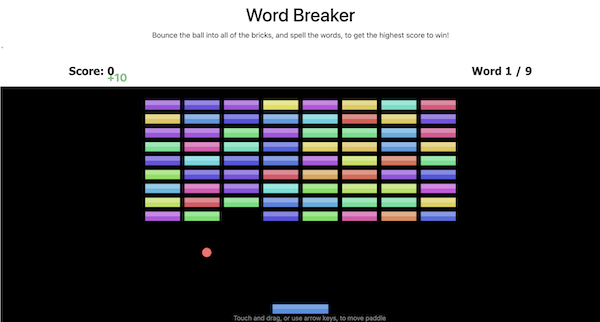
And spelling practice does not have to feel like a chore. Word scrambles, fill-in-the-blank races, and other game formats keep students engaged and make them far more likely to actually sit down and do the work. We wrote about how this works in practice over in our introduction to spelling games.
None of this replaces good teaching. What it does is make it easier for teachers and parents to give every student the repetition and feedback they need, without a ton of prep.
Putting it all together
There is no single best type of spelling test. The right choice depends on your students’ ages, learning goals, and where they are in their spelling development. A good spelling program mixes formats: written tests for formal assessment, phonics-oriented tests to build pattern recognition, and aural or oral tests to strengthen listening and production.
What matters most is consistency. Students learn to spell when they see words again and again over time, with feedback in between. The format matters less than the repetition.
If you are looking for a platform that brings several of these test types together, with built-in differentiation, spaced repetition, and interactive practice, Spelling Test Buddy is worth a look. It takes the setup work out of your hands so you can focus on actually teaching.
Looking for more on spelling instruction? Read about whether spelling tests actually help students and how the Science of Reading connects to spelling.
Ready to get started?
Try Spelling Test Buddy today, for free!
Start Creating Tests, Practice, and GamesUsed by teachers around the world