A Reddit post in r/Teachers went quietly viral last week. A veteran elementary teacher wrote that her district had eliminated spelling tests, discouraged flash cards, and pushed her away from any form of memorization practice. She wanted to know if she was wrong to push back.
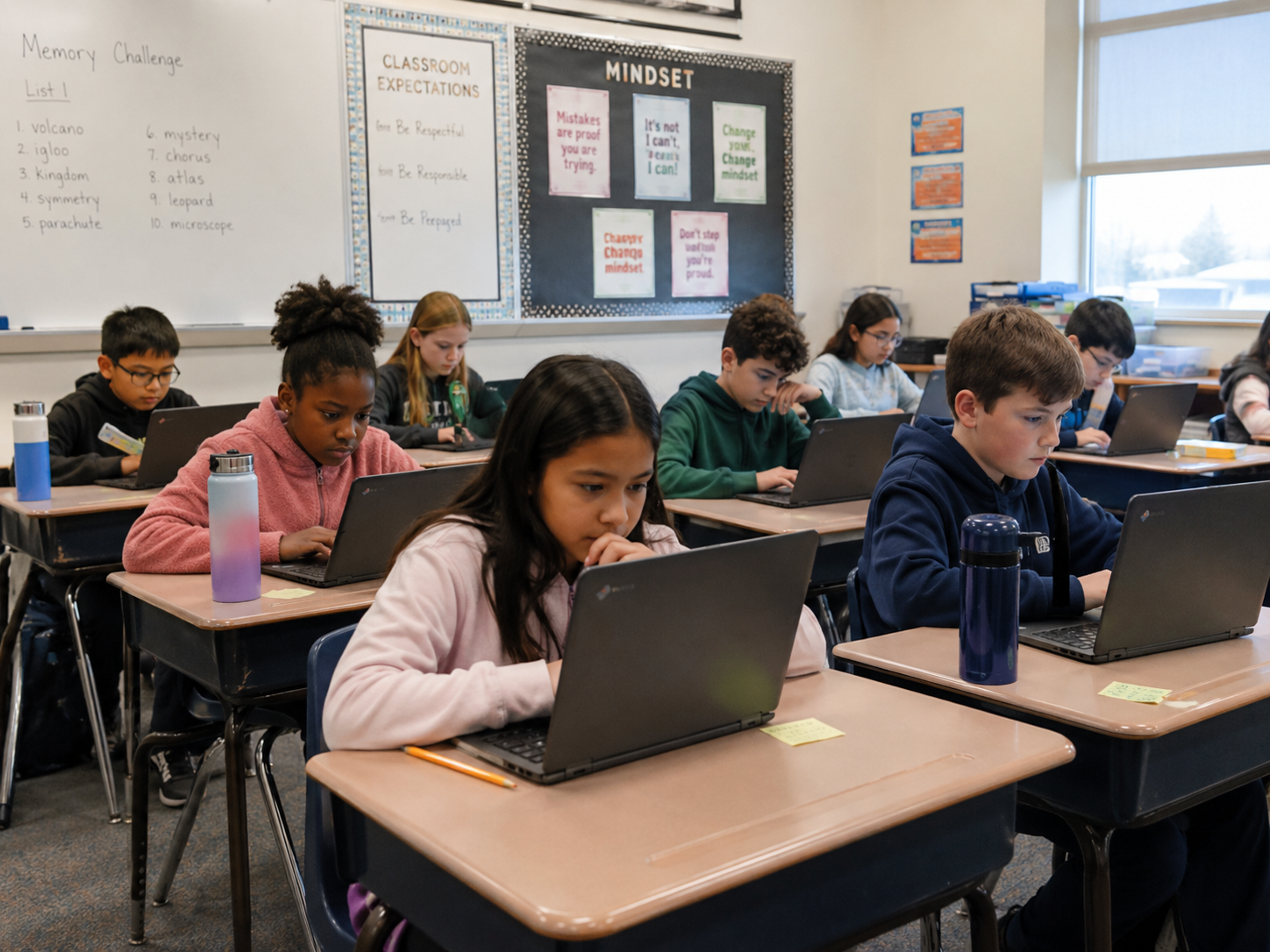
She got 1,700 upvotes and hundreds of responses from teachers who said the same thing is happening in their buildings.
The thread is worth reading in full. Here are a few things that stood out.
“It’s a travesty”
One teacher put it plainly: “Rote memory has to be both trained, and also used to clear up mental space for students to be able to focus on harder tasks. It’s a travesty that education advocates have minimized the importance of memorization in the past 20 years.”
A college algebra instructor described the downstream effect: students arrive in his course unable to factor because they never memorized multiplication tables. He spends the first two weeks of class on remediation that should have happened in 4th grade. “People treat multiplication tables like some outdated elementary-school exercise,” he wrote, “but they are foundational.”
A high school physics teacher was blunter: “Memorize. Drill and kill. So god damn stupid” that districts have moved away from it.
These aren’t isolated complaints. They echo what researchers call cognitive load theory: working memory has a fixed capacity. When students have to stop and calculate 6 × 8 in the middle of an algebra problem, or sound out their in the middle of a reading passage, that cognitive effort crowds out the higher-order thinking the lesson was actually supposed to develop. Memorized facts free up the mental space that learning requires.
It’s not only math
The thread ranged across subjects. A high school social studies teacher wrote that students can’t understand world history if they don’t know where the continents are. A middle school teacher described students living on the shore of the Atlantic Ocean who couldn’t name it. A reading specialist noted that districts have taken down word walls in favor of mouth-shape charts: “Students need to memorize those words.”
The original poster made exactly this point about spelling. Her district replaced traditional spelling tests with a five-word pattern test and three sentences. That’s not the same thing. Pattern recognition and rote automaticity are both real skills, and students need both.
As one commenter summarized it: “Can’t have skills or higher order thinking without some basic memorized facts.”
What this means for spelling
Spelling is a direct casualty of the anti-memorization movement, and the research is clear about what’s been lost.
English has a large number of high-frequency words — because, through, thought, their, they — that cannot be reliably decoded by sounding out alone. The Science of Reading calls for orthographic mapping: students build a permanent memory representation of each word by connecting its sounds, letters, and meaning. That process requires repeated, deliberate practice. It doesn’t happen by reading the word in context a few times.
When districts eliminate regular spelling tests in favor of a handful of pattern words per week, students lose the structured repetition that orthographic mapping depends on. Pattern instruction matters. But so does the rote practice that burns individual words into memory. The teachers in that Reddit thread have watched the results play out in their classrooms. Students who can identify a phonics pattern still can’t spell the actual words that follow it.
There’s also the question of irregular words that no pattern rule covers: pseudonym, acquiesce, beautiful. These words have to be memorized. There’s no phonics shortcut.
How regular spelling tests fit in
A weekly spelling test isn’t just an assessment. It’s a practice event. The act of retrieving a word from memory (trying to spell it, getting feedback, trying again) is exactly the repetition that builds durable retention. Research consistently shows that students who take spelling tests improve more than students who study the same words passively.
The teachers in this Reddit thread are describing the value of repeated, low-stakes retrieval practice for foundational knowledge. That’s what flash cards do in math. It’s what spelling tests do in literacy.
Spelling Test Buddy is built around exactly this. Teachers create word lists tied to their curriculum, assign them to students, and get back results showing which words each student missed. Students can practice the same list multiple times before the test. The Adaptive Learning Programs feature uses spaced repetition to resurface words that students have missed, bringing them back at the right interval to move them from short-term recall into long-term memory.
It’s rote memorization built upon a foundation of structured retrieval practice. This is what the research says works, and what the teachers in that thread have been watching get quietly removed from their schools.
If your district has pulled back on spelling tests, you don’t have to wait for a policy change to bring them back for your students. The tools are there.
Ready to get started?
Try Spelling Test Buddy today, for free!
Start Creating Tests, Practice, and Games